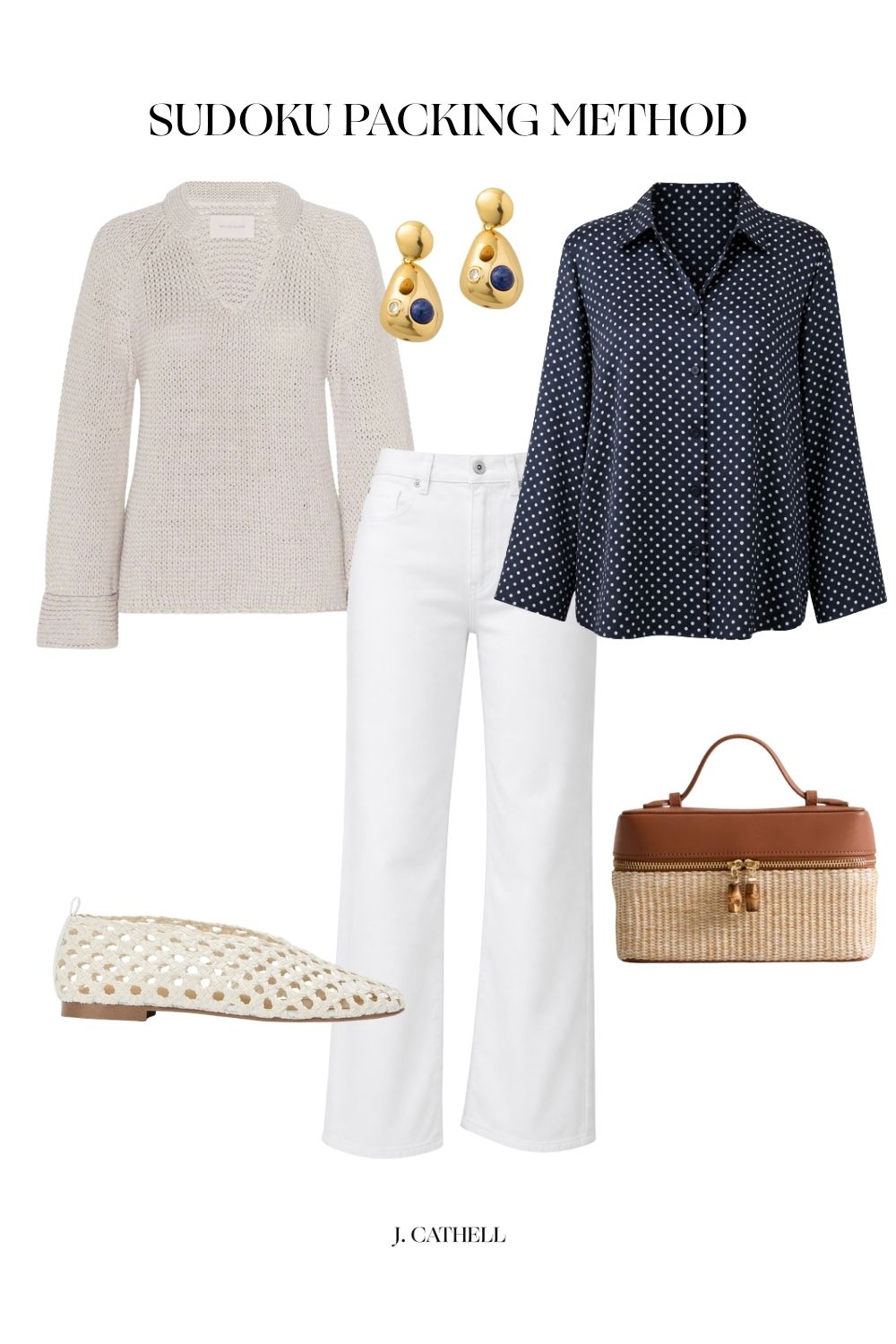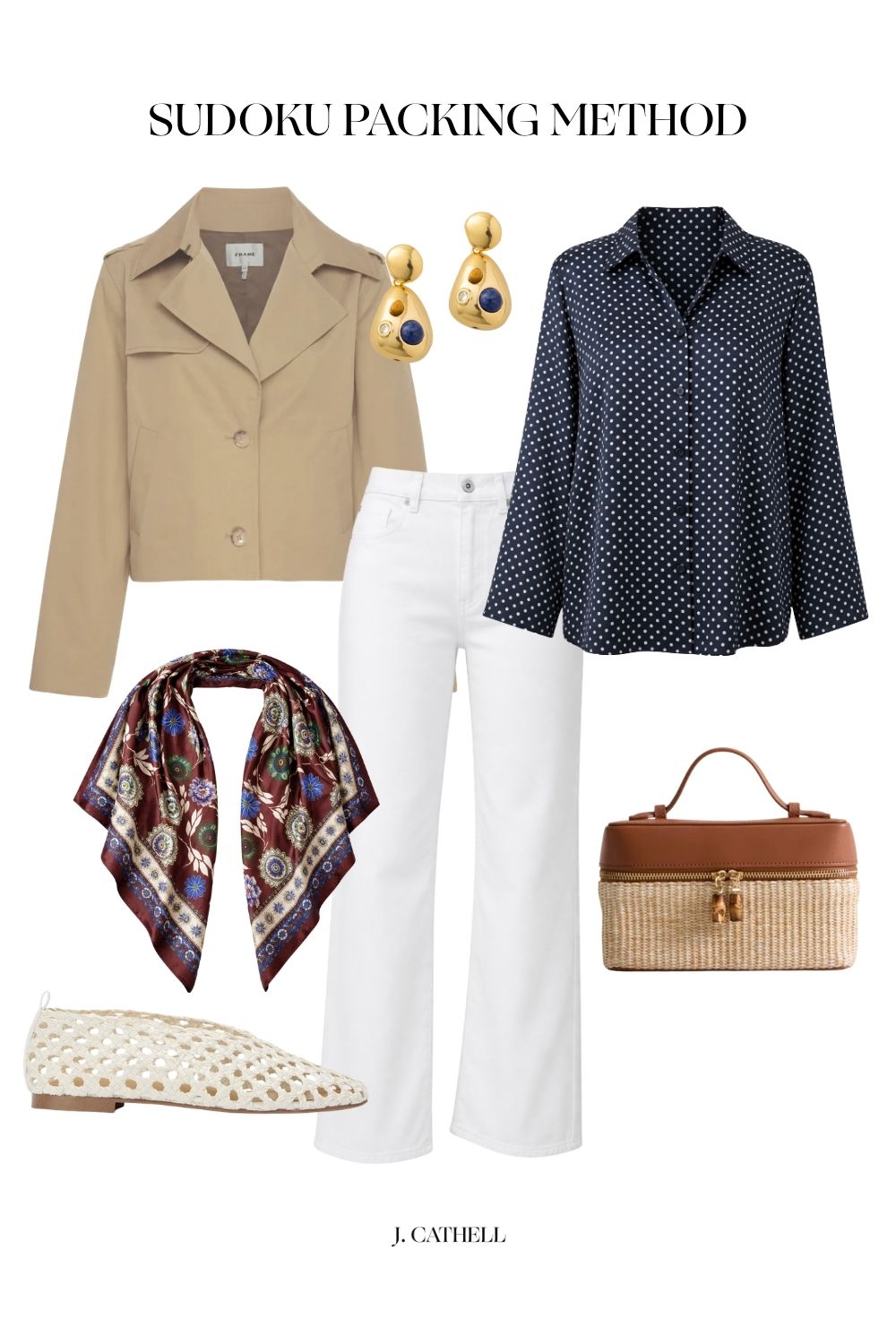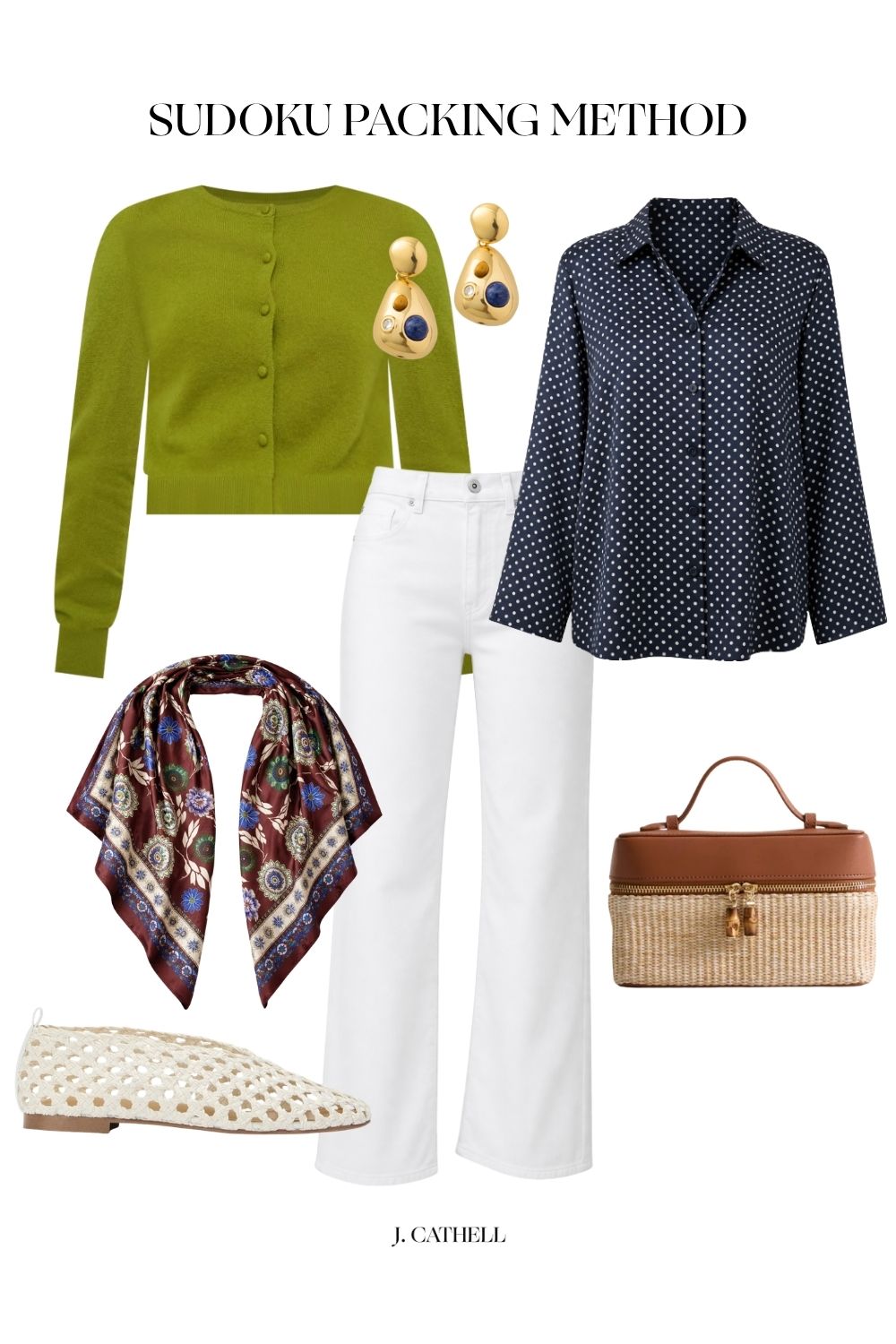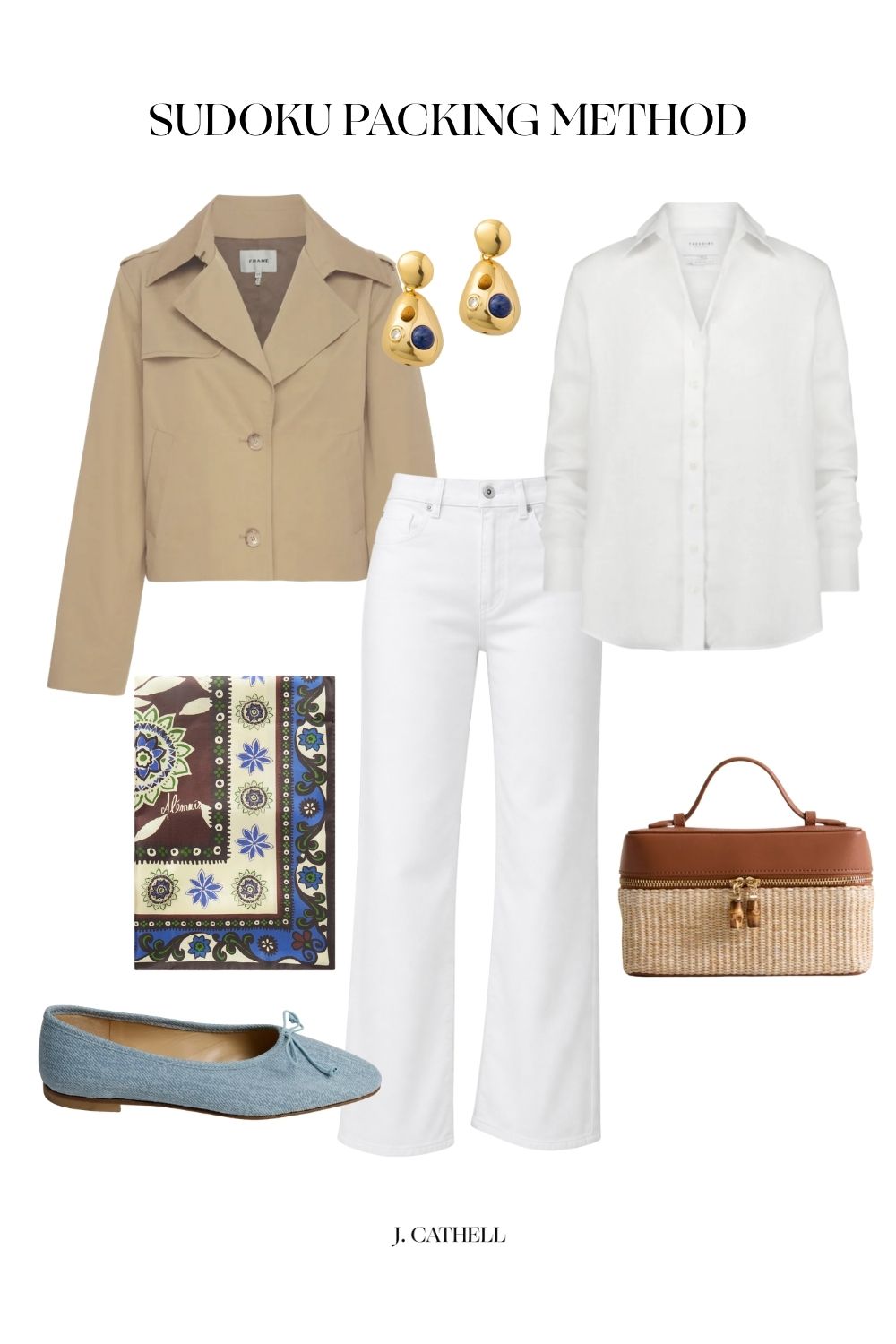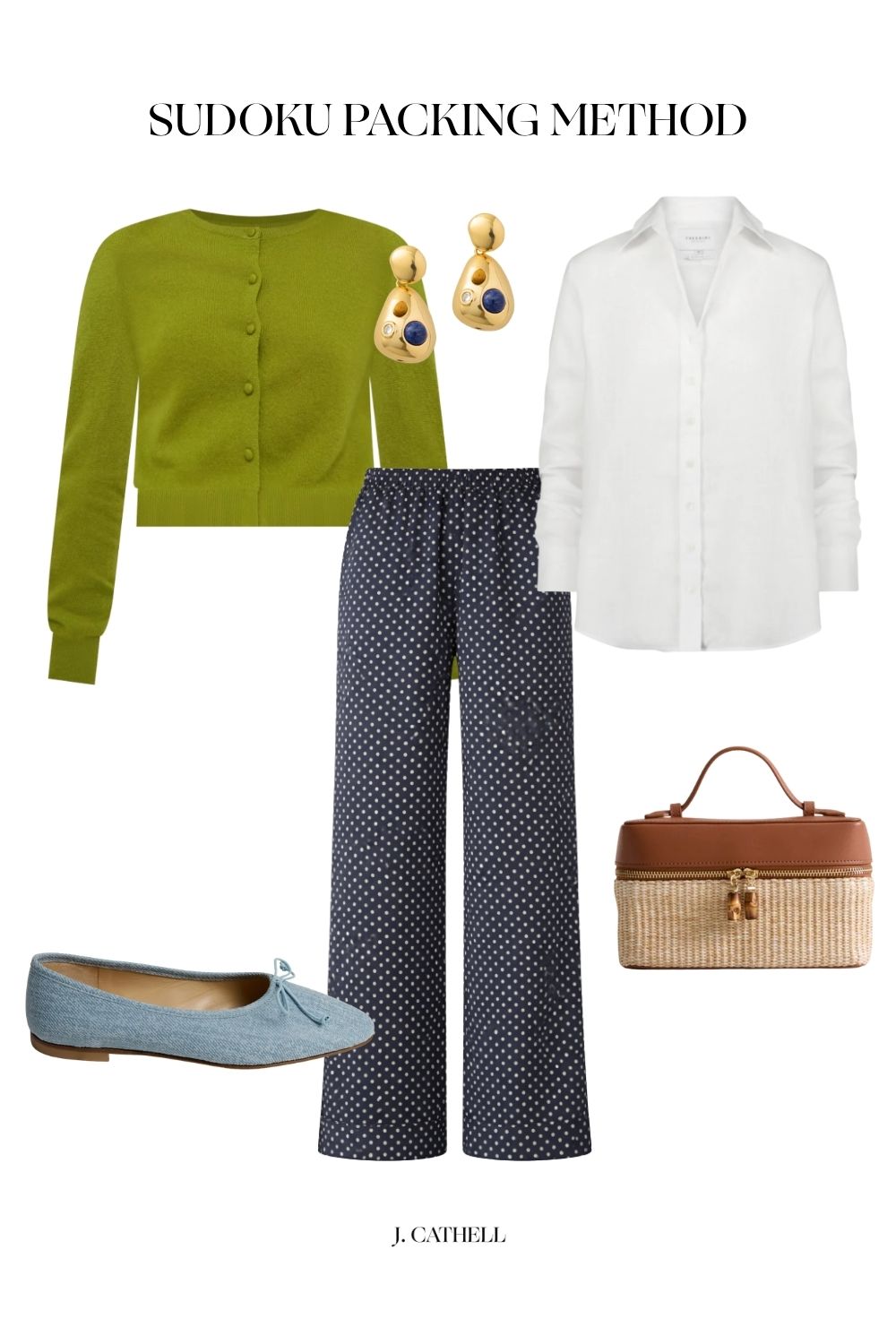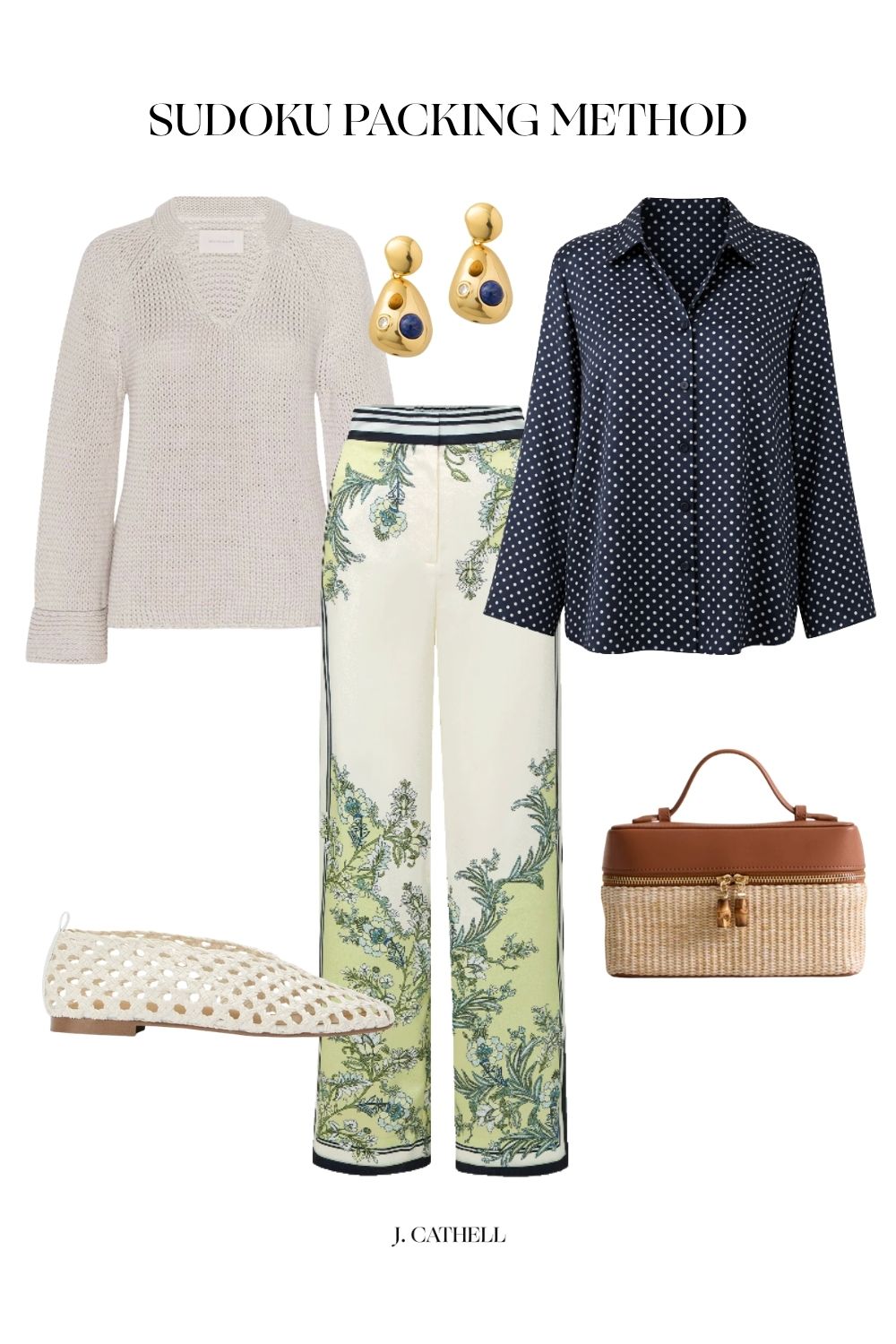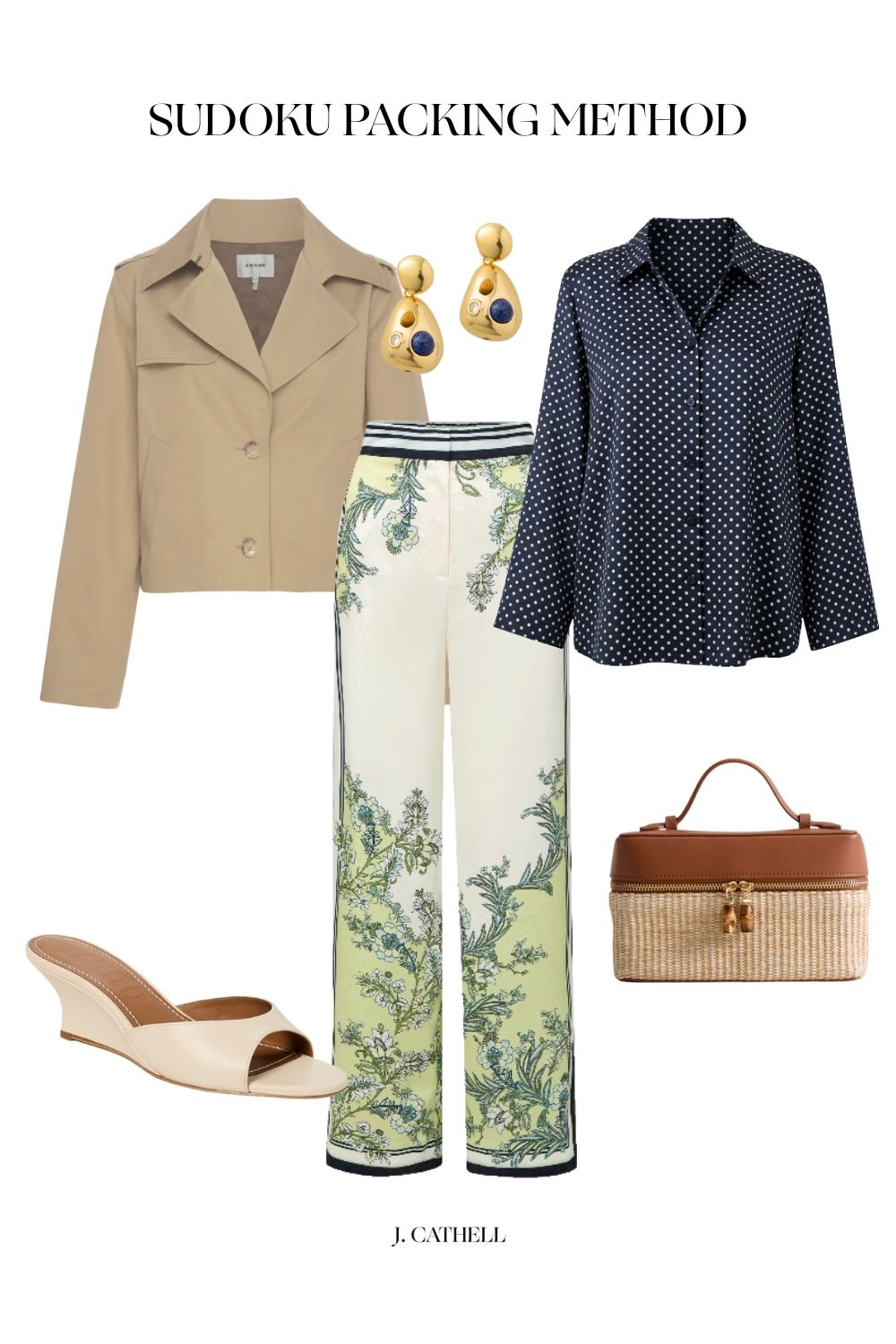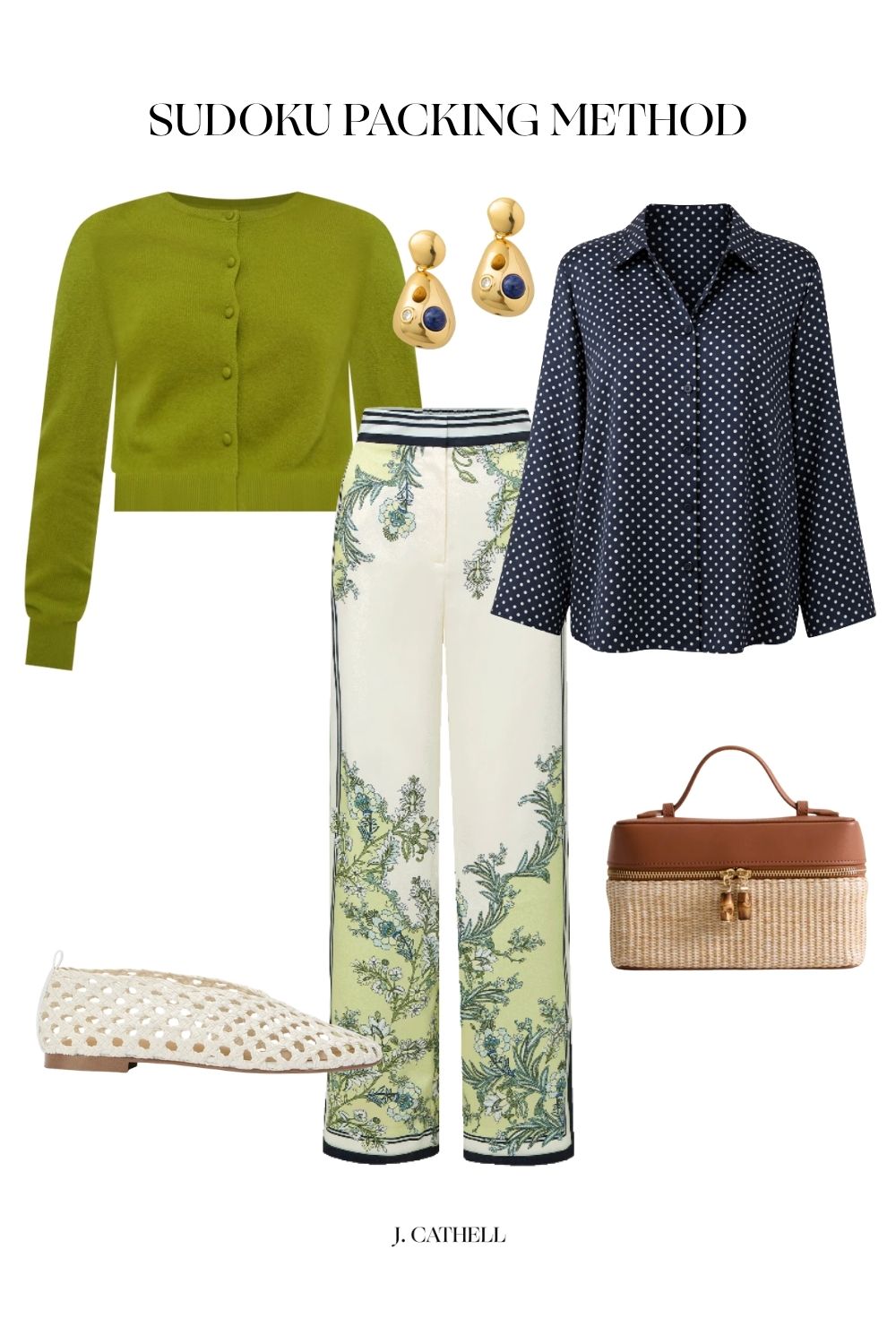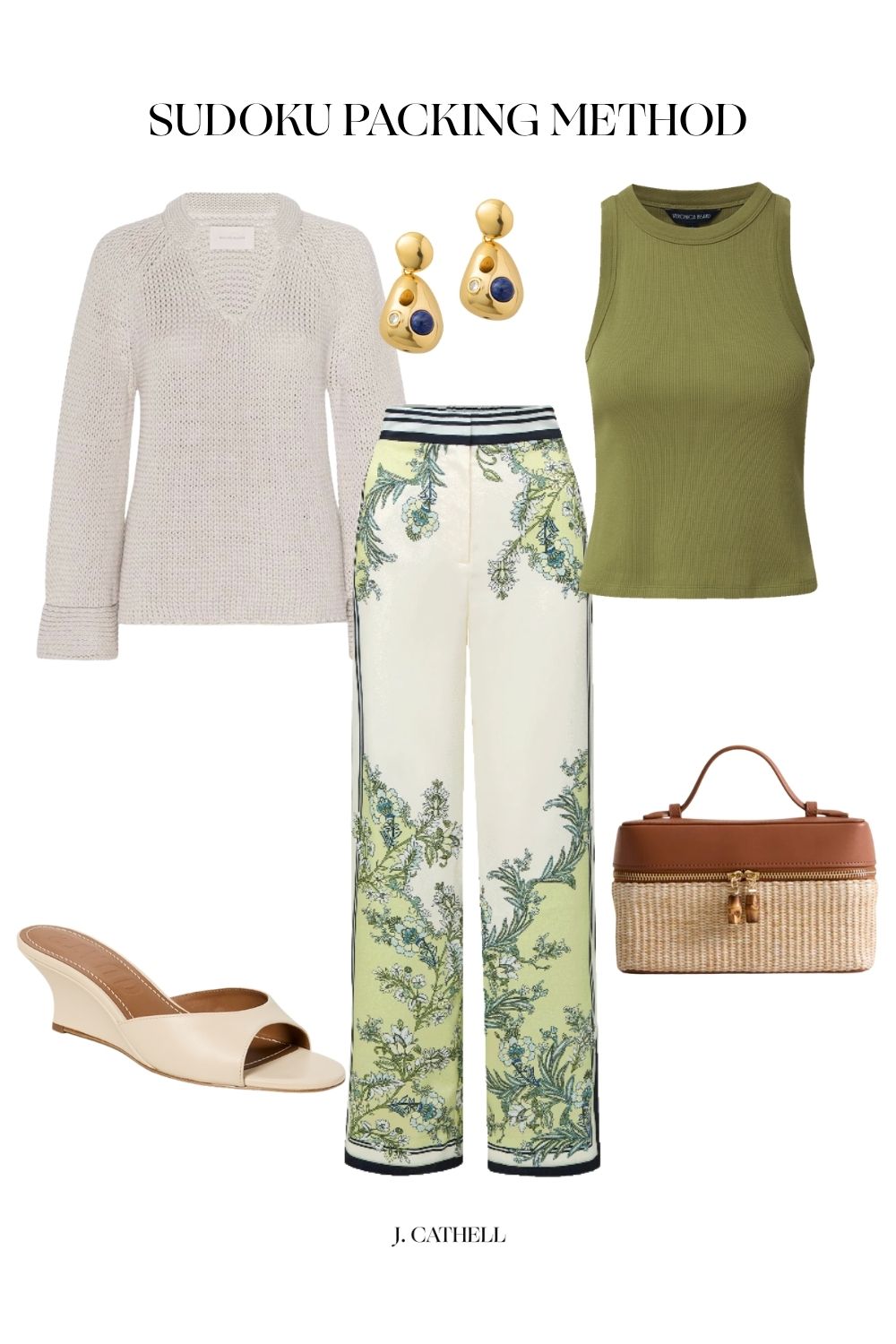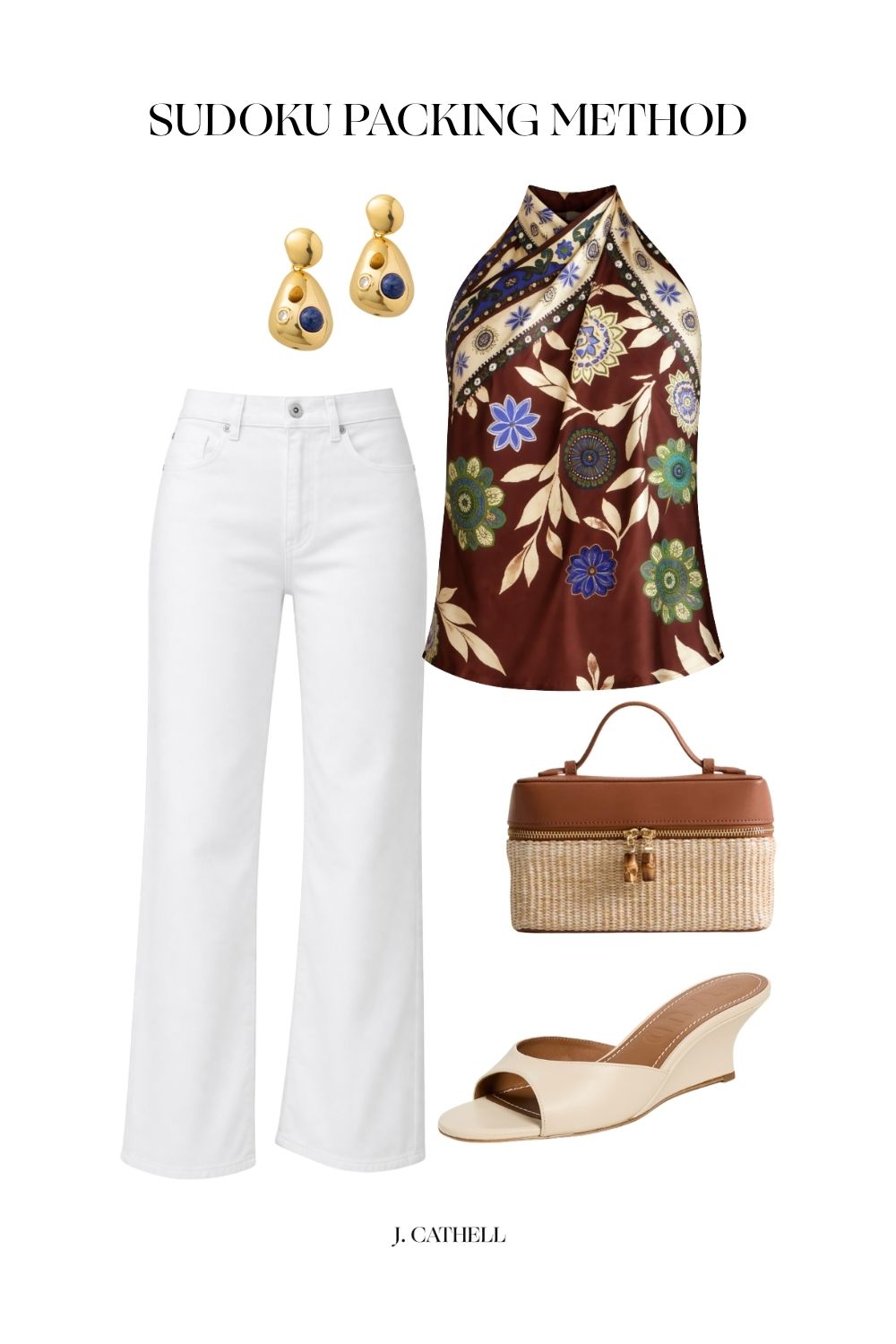
Let’s be honest. You’ve packed for a trip before and still managed to stand in your hotel room on day two with nothing to wear. You brought twelve things and somehow none of them go together. You know the feeling.
The sudoku packing method is having a major moment right now — and for good reason. It’s the kind of packing system that actually makes sense once you see it, and once you use it, you’ll never go back to throwing things in a bag and hoping for the best.
★ What Is the Sudoku Packing Method, Exactly?
If you’ve seen it floating around your Instagram feed or saved it on Pinterest without fully reading it — here’s the actual breakdown.
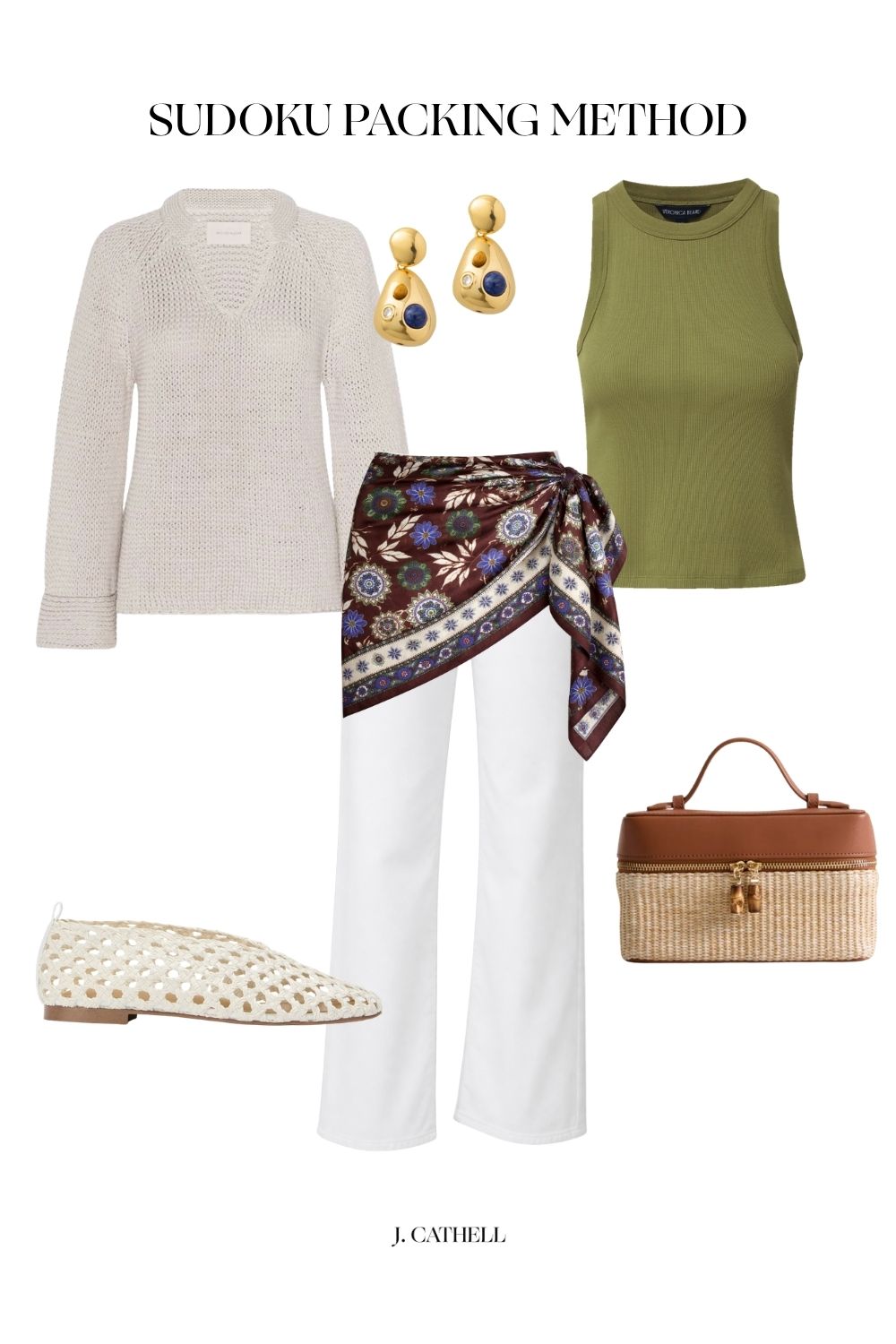
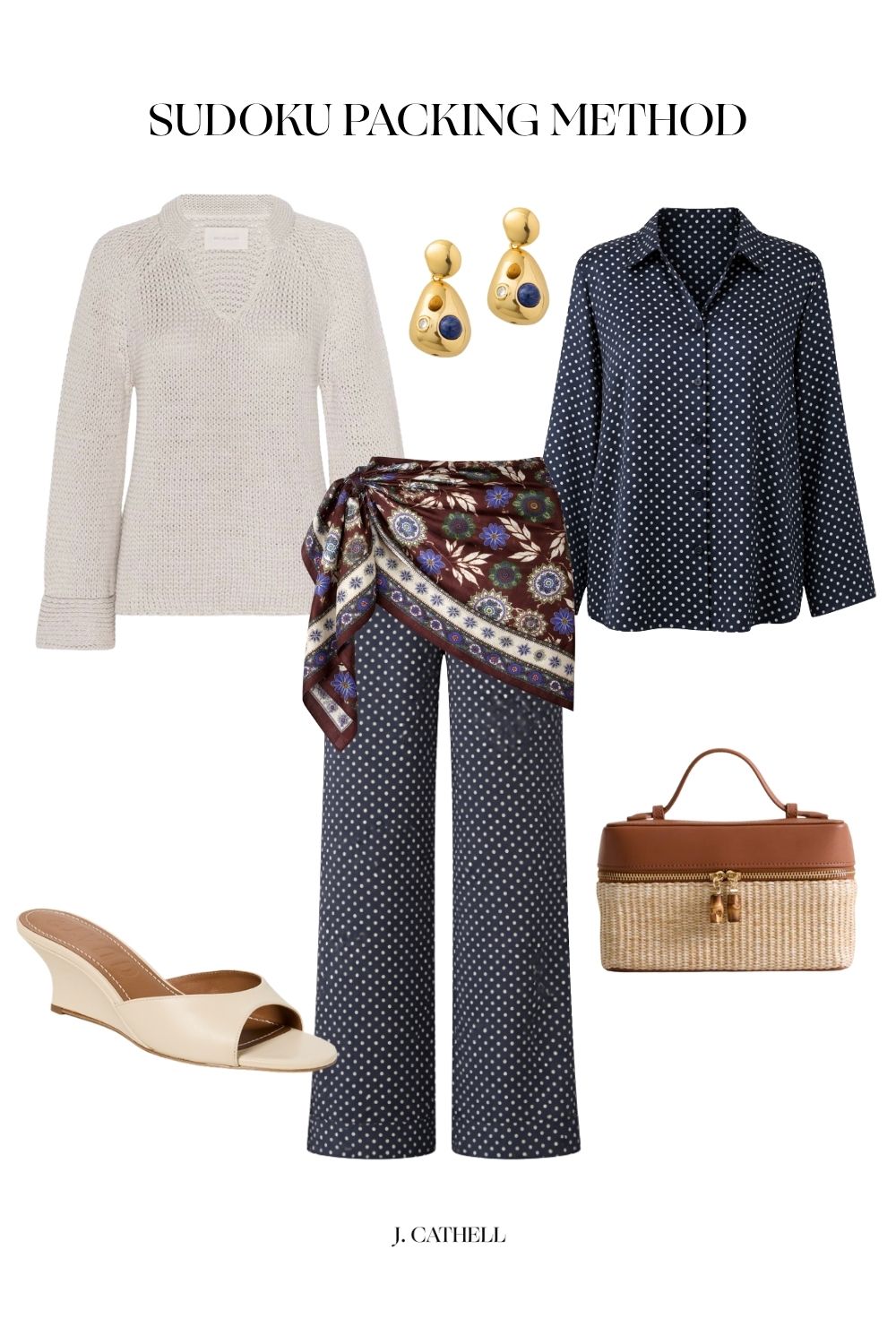
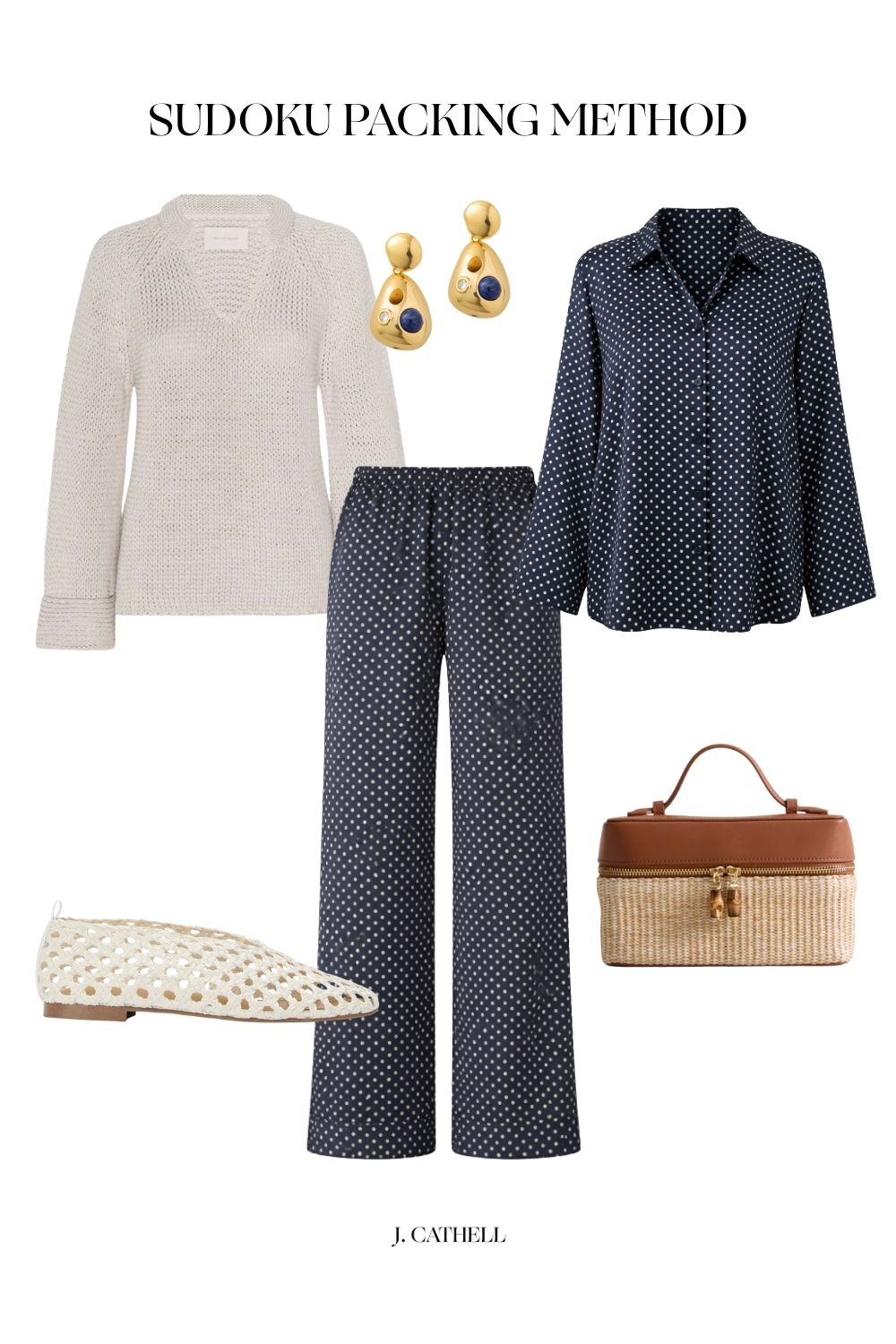
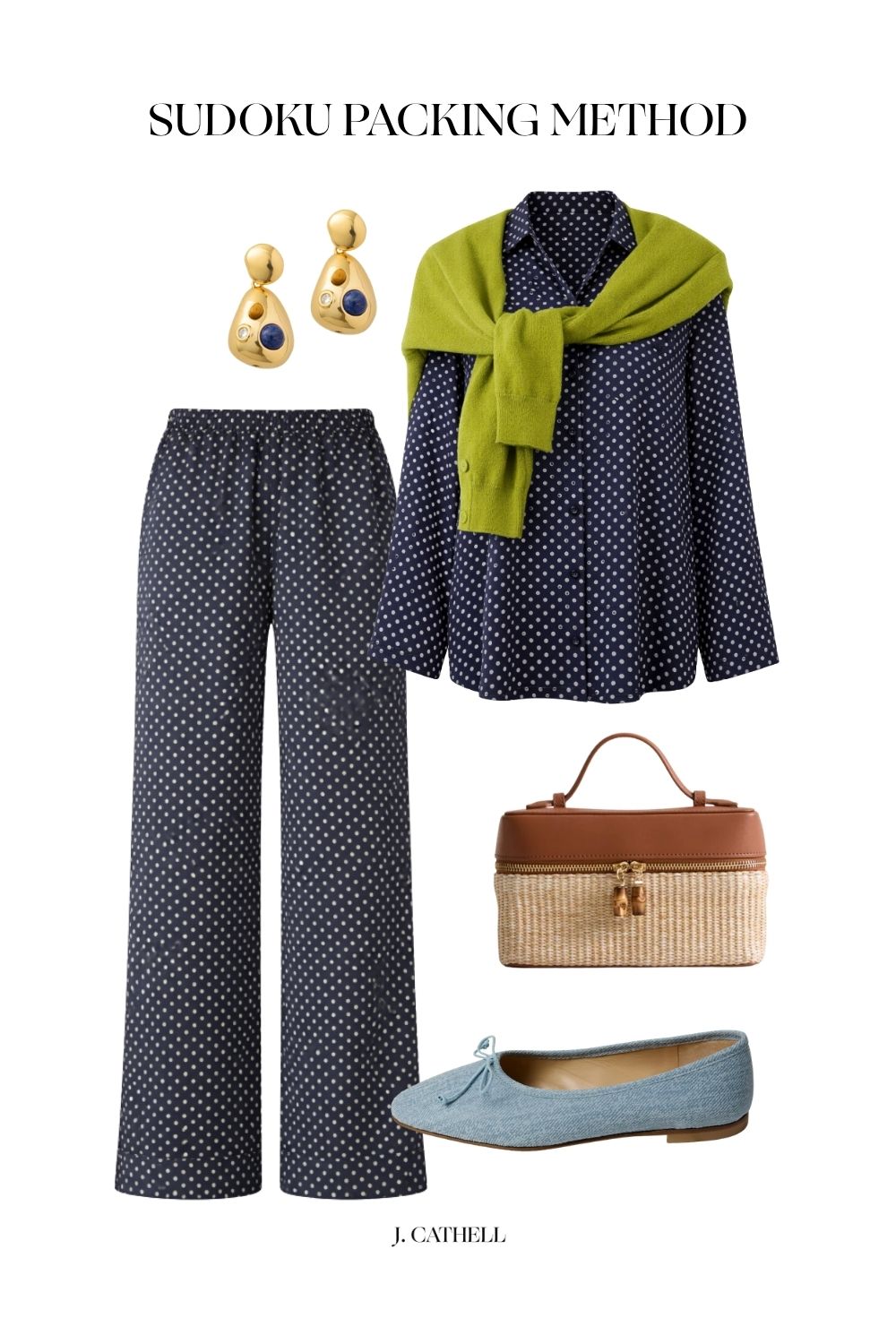
The method uses a 3×3 grid: three tops, three bottoms, and three layers. The rule is that every single piece must work with every other piece in the grid. No one-trick items, no “just in case” pieces that only pair with one thing. Everything has to earn its spot.
Read the grid horizontally, vertically, or diagonally and you get a complete outfit every time. That’s where the 27 combinations come from — and that’s a conservative count. Factor in your shoes and accessories and the number climbs even higher.
What makes it different from a regular capsule wardrobe is the structure. It’s not just “pack neutrals and hope for the best.” It’s a system with a logic to it, which means you can build it intentionally and trust it completely.
Rule 1: Every piece must work with every other piece.
This is the whole game. If you’re holding a top and you can only think of one bottom it goes with, it doesn’t belong in your grid. You need pieces that are genuinely versatile — not “versatile” as in technically you could wear it with something, but versatile as in you’d actually reach for that combination.
Rule 2: Vary the silhouette within each row.
If all three of your bottoms are straight-leg trousers, you’re going to be bored by day three. You want different shapes, different energies — a skirt, a trouser, a jean. Same principle for tops. A loose button-down, a fitted tee, a tank. The grid gives you 27 combinations, but the silhouette variation is what makes those combinations feel like 27 different outfits.
Rule 3: Let your layers do the heavy lifting.
A blazer, a cardigan, and a trench coat are not interchangeable. They each change the entire temperature — literally and figuratively — of an outfit. The same top and trouser combination reads completely differently under each one. This is how 9 pieces becomes 27 outfits: the layers are doing one third of the work.
★ Frequently Asked Questions About the Sudoku Packing Method
What is the sudoku packing method?
The sudoku packing method is a travel packing system built around a 3×3 grid of clothing — three tops, three bottoms, and three layers — where every piece is chosen to work with every other piece. The result is 27 outfit combinations from just 9 garments.
Does the sudoku packing method actually work?
Yes — if you build the grid correctly. The system only works when every piece genuinely pairs with every other piece. The mistake most people make is including one “special” item that only works with one specific bottom or top. Follow the rules strictly and the math holds up every time.
How do I pack accessories with the sudoku method?
Add a fourth row to your grid: three pairs of shoes, one bag, and one to two accessories. Choose shoes in neutral or metallic tones that work across the whole grid rather than matching specific outfits. Your bag should work with at least two of your three color families.
Can you use the sudoku packing method for a week-long trip?
Absolutely. The 3×3 grid gives you 27 combinations, which is more than enough for a week. For trips longer than 7 days, add a 4×4 version — four tops, four bottoms, four layers — which gives you 64 combinations. The cross-compatibility rule stays the same; just scale up.
What’s the difference between the sudoku method and a capsule wardrobe?
A capsule wardrobe is a longer-term strategy for your whole closet — a curated collection of pieces that work together across seasons. The sudoku method is a trip-specific packing tool. Think of the sudoku grid as a travel-sized capsule wardrobe built for a specific destination and climate.
One Last Thing
The goal of any good packing method is the same: to stop thinking about what you’re wearing and start thinking about where you are. The sudoku method does that. It removes the decision fatigue, it eliminates the dead weight, and it gets you to the part of the trip that actually matters.
Build your grid before you pack, not while you’re packing. Lay everything out, check that each piece truly works with every other piece, then put it in the bag. That’s it. That’s the whole system.